Sustaining Open Source conversations at Devconnect ARG 2025: What are the critical conversations about OSS in the web3, decentralisation, Blockchain and crypto space?
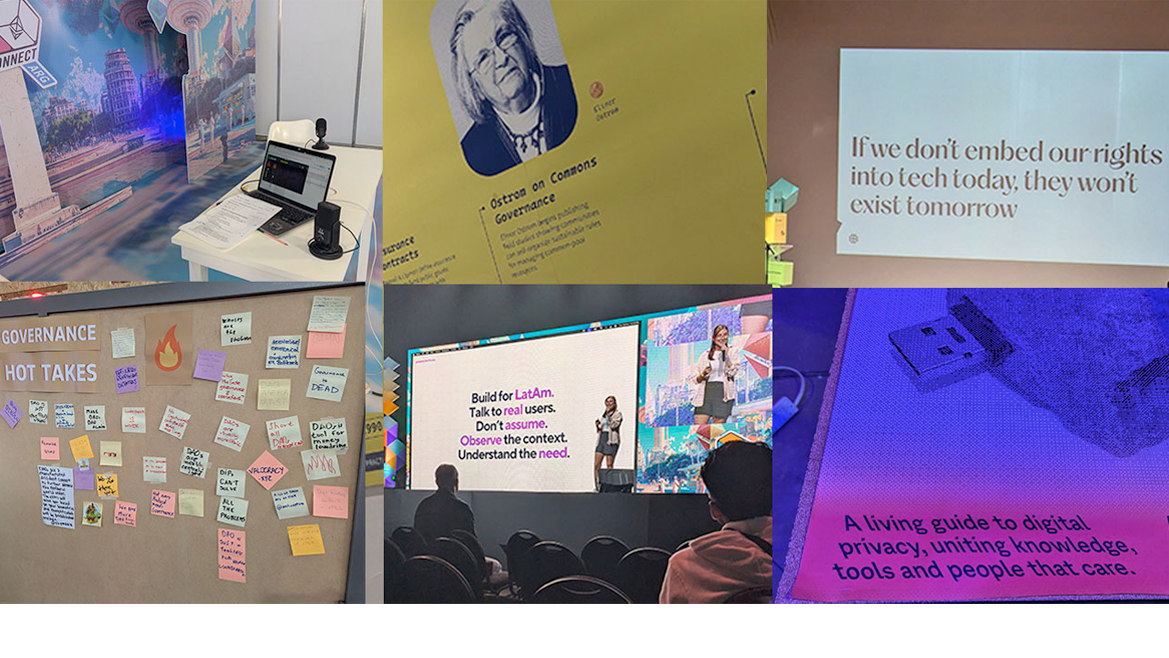 Photos from around the Devconnect ARG conference 2025 taken by Eriol Fox
Sustaining Open Source conversations at Devconnect ARG 2025: What are the critical conversations about OSS in the web3, decentralisation, Blockchain and crypto space?
After having 8 conversations for the Sustain OSS podcast at Devconnect ARG conference in Argentina in 2025 I have some thoughts, reflections, questions and concerns.
Find all the conversation podcasts with the folks listed here over at Sustain OSS Podcast. https://podcast.sustainoss.org/
First of all, I’m a digital human rights activist. I believe in privacy, security, human rights, freedom, anti-surveillance and free and open source access to technology that democratises access through ensuring that the barriers to adoption of technology to keep people safe is as accessible, usable and open as possible and continues to push for more usable, more accessible and more freedoms. I am also aware that we live and exist in structures, governments, societies that don’t always have these freedoms, human rights and access needs at the heart of life. It’s a fact that marginalised global majorities have access and adoption to technology throttled, either by finance or by a governing system.
Learning about the governance systems across the Ethereum ecosystem with Nixo, was enlightening. The encouraging aspects of this centered around the value of distributed, and removing individual, personal selection bias from governance. As I understand it, this is done by users, builders and contributors indicating and voting on what are the critical needs across the ecosystem. In other projects, I’ve noticed that preference is given to users and adopters of an OSS that have allocated grant money, in-house company developer time or some other financial incentives to a specific feature, enhancement or bug that most affects that entity. In essence, I don’t think this is the most flawed process but it certainly reminds us starkly that OSS, regardless of its own ‘status’ (e.g. staffed project, volunteer maintenance etc.) exists within society that runs on financials. A day spent fixing a bug or building a feature is never truly free when the humans writing code and fixing problems in OSS need to pay rent/mortgages/bills and buy food. In this way, focusing on what can pay you for your time makes some sense. You cannot eat code. But what Ethereum does is allow for a participatory approach that focuses not only on resources, but needs across the ecosystem to prioritise, fund and focus on.
It is worth noting that this gathering, participatory approach is also human labour and building systems for consensus, decision making, transparency and ensuring that equity is strived for across voices is always going to be difficult. This conversation resparked some thoughts of decision making, decisions on how to grow/sustain an OSS project and community, moving away from a benevolent leader for life and more distributed communication and decision making amongst users and also, potential users.
“Usability is the really the single remaining barrier to mass adoption of OSS’ says Nuno, the design lead at the Ethereum foundation and as a fellow designer in OSS, i have to agree. Now I know it’s not that simple as one single answer for mass adoption, of course there’s access to affordable devices, education, support, documentation and knowing how to trace and help dependencies for which OSS tools a person may choose to use.
But Nuno raises a critical point here, that most, if not all OSS and emerging technologies like web3 and decentralisation tools do have user adoption curves that rely on a high level of comfort, ability, knowledge and access to technology. For example, Vitalek mentioned in a conversation about privacy and security, when thinking about UX, he suggests that UX needs to tackle the human cognitive dissonance and confusion that occurs when a technology system is unpredictable and unreliable, and that therefore, UX and Usability bridges and mitigates the drop off and panic when a system is ‘unreliable’. The example given is when making a transaction from a wallet, on three separate occasions the transaction might take 2 seconds, 10 seconds and 30+ seconds to process and complete. As a user, which is ‘correct’? When a system that we don’t fully understand the complexities of is variable, user confusion sets in and lowers confidence in the core abilities of the technology. UX and usability can mitigate this, with content design that offers help text, affirming messaging and also UI and Graphics that reassure the user the system is working as expected within a given threshold or is indeed, encountering a problem the user can intervene with.
Mario, who works in protocol support at The Ethereum Foundation, who is deeply involved in a hacker space where he is located, spoke about how FOSS is a method and structure for empowerment outside of controlled structures. In this way, people that want and need to operate outside of the standard accepted methods of finance can do so via crypto currency and wallets. You might think, why would anyone want to operate outside of the structures set by society and governments? This is critical to folks under pressure and risk from those institutions and structures. Human rights activists, refugees, whistleblowers are among some of the individuals that may want to distance themselves and their activities from institutions that track and monitor what citizens and individuals do online.
I imagine that people that do illegal and harmful acts online came into your mind as you read about people circumventing structures of control online. Of course this is true, there are bad actors and people seeking to harm others with every new technological innovation. As discussed with Trent who also works with protocol co-ordination at the Ethereum foundation we went deep on how centralisation isn’t beneficial for everyone worldwide. Where Devconnect ARG was based in 2025, in Buenos Aires Argentina, plenty of conversations were had by locals about the extreme fluctuation of their currency and the lack of trust in banks to protect regular citizens from inflation. Trent spoke about how the common news media focuses on salacious stories of scams and harm from the crypto and web3 space and how rarely we hear of the regular citizens relying on these technologies to live. As heard at Devconnect, people across economies with unstable currencies are using stable coins. This conversation reminded me to be balanced in the media that I read, skepticism and stories or harm are valid, but ensuring these are balanced with stories of those empowered and drawing your own understanding of what matters, to whom and under what circumstances is key.
This was quickly evidenced when speaking with Shu, who works as democratic media journalist https://en.wikipedia.org/wiki/CGNet_Swara in central India. Shu himself is careful and critical of technology, especially given his background isn’t in technology, coding or decentralisation but understands that there can be opportunity for the marginalized voices in potentially risky technology. He wants to see what decentralised technology, web3 and crypto can do for those that are unbanked and unheard to raise up local voices to become compensated citizen reporters on what is happening on the ground in regards to oppression, extremism, terrorism and violence in communities. He is still concerned about the stability of such technology and that it could be used to exploit and also how financially incentivising citizens to report could mean false or embellished reports, but he also expressed how deeply news media must become democratized and balance struck between ‘owned’ news media outlets and the citizens.
Finally, speaking about funding with Lucas who heads up partnerships from https://www.drips.network/ and Devansh from the funding and public goods spoke about how to shift the funding ecosystem across FOSS by democratising the ways in which your dependencies and communities want to be supported and how. This and ‘quadratic’ funding is an option for evolving these decisions. Lucas also spoke to the need for FOSS projects to better market, communicate and develop their needs for support.
As web3, decentralisation and crypto evolves, matures and finds its place in and across FOSS, disengaging with the conversation and education would be the worst route to the future while remaining critical, communicative and educational about the distributed risks and opportunities can keep us all globally secure and sustainable.
“And it’s clear that crypto is still struggling with the tradeoffs between giving everyone full control over their own digital money and subsequently having no one to turn to when something goes wrong.” https://gizmodo.com/120-million-crypto-hack-blamed-on-office-space-style-exploit-2000682620
Practicing the balance mentioned, it’s worth looking at https://www.web3isgoinggreat.com/ as a record of skepticism for these technologies along with investigating some of the human rights activists working on like block-lattice cryptocurrencies https://en.wikipedia.org/wiki/Nano_(cryptocurrency) and secure scuttlebutt https://en.wikipedia.org/wiki/Secure_Scuttlebutt.